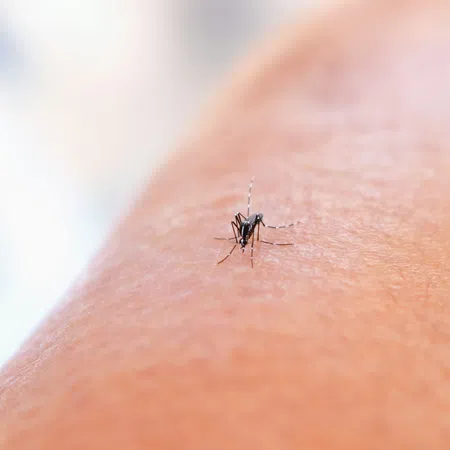
The fastest way to tell bed bug bites from mosquito bites is where they sit and when they showed up. Bed bug bites land on skin that was covered or pressed against the mattress while you slept, often in a straight line or tight cluster of three to five, and most people do not notice them until the next morning or even a few days later. Mosquito bites land on skin that was exposed outdoors, scatter randomly, and start itching within minutes. In South Florida, where mosquitoes bite twelve months a year, the mix-up is common, and getting it wrong means treating the wrong pest.
What Bed Bug Bites Look Like
A bed bug feeds for five to ten minutes, then moves a short distance and feeds again, which is why the bites run in rows or clusters along one stretch of skin. The classic placement is the arms, shoulders, neck, face, and hands, the parts of the body that touch the sheets or stick out from the covers. Bites rarely appear under pajamas or on the soles of the feet.
Each bite is a small, raised, red welt with no obvious puncture in the center. The bug injects an anesthetic while feeding, so nobody feels it happen, and the reaction is delayed. Some people see welts within hours, some take several days, and roughly one in three people never react at all, which means one person in a bed can be covered in bites while the partner has none.
The itch tends to be more intense and longer lasting than a mosquito bite, and a fresh set of welts appearing every few mornings is the pattern that points to a bedroom problem rather than a backyard one.
What Mosquito Bites Look Like
A mosquito bite becomes a puffy, pale bump with a red border within a few minutes of the bite, then settles into a firmer reddish bump over the next day. The itch starts almost immediately because the body reacts to the mosquito's saliva on contact. Most bites fade within three to seven days.
Placement follows exposure. Ankles, calves, forearms, the back of the neck, and the face are the usual targets because that is what is uncovered on a patio or during a walk. The bites are scattered rather than lined up, since each mosquito takes one meal and leaves, and several mosquitoes rarely land in the same spot.
Timing is the other giveaway. Mosquito bites show up after time spent outside, especially around dawn and dusk, although the Aedes mosquitoes common in South Florida bite through the middle of the day as well. Waking up with new bites after a night spent fully indoors is not a mosquito pattern unless the house itself has mosquitoes inside.
Why The Mix-Up Happens So Often In South Florida
Most online comparisons assume mosquitoes are a summer, outdoor problem, and neither assumption holds here. Broward, Miami-Dade, and Palm Beach counties have active mosquitoes in every month, and the Aedes aegypti mosquito, the species most likely to be living in a yard with bromeliads, plant saucers, or a clogged gutter, prefers to rest indoors and bites during the day. A household with Aedes aegypti inside can wake up with bites and reasonably suspect bed bugs.
The reverse mistake is just as common. Travelers come home from a hotel or a cruise, notice bites a week later, and blame the mosquitoes on the lanai, when the bites actually began with bed bugs that rode home in luggage. Because bed bug reactions can take days to appear and the first few bites are often dismissed, infestations in South Florida homes are frequently a month old before anyone looks under the mattress.
Fleas and no-see-ums complicate the picture further. Flea bites cluster around the ankles and lower legs in homes with pets, and no-see-um bites are tiny, intensely itchy, and come in groups after time near water at dusk. Both are easier to rule in or out once the bed bug and mosquito patterns above are clear.
How To Confirm Bed Bugs Before You Treat Anything
Bites alone never confirm bed bugs. The bedroom does. Strip the bed and check the mattress seams, the piping along the box spring, the underside of the box spring fabric, and the joints and screw holes of the headboard with a flashlight. Adult bed bugs are flat, reddish brown, and about the size and shape of an apple seed. Nymphs are smaller and lighter, close to translucent after molting.
Three kinds of evidence show up before the bugs themselves do:
- Rust-colored or dark brown spots on the sheets and mattress seams, which are digested blood the bugs leave behind.
- Pale, papery shed skins caught in seams and crevices, since each bug molts five times on the way to adulthood.
- Small blood smears on the sheets from bugs crushed during the night.
A heavy infestation adds a sweet, musty odor to the room. If a full inspection of the bed turns up nothing, move to the nightstand drawers, the baseboards behind the bed, and any upholstered chair within a few feet of it. Bed bugs stay close to where people sleep, so a clean bed and clean surroundings make mosquitoes, fleas, or no-see-ums the more likely answer.
Treating Each One The Right Way
The two pests need completely different responses, and the bites are the only thing they share. Spraying a bedroom for mosquitoes does nothing to a bed bug population living inside the box spring, and treating a mattress does nothing about mosquitoes breeding in a bromeliad outside the window.
Our bed bug treatment is a three-visit protocol spaced about seven days apart. The first visit treats the bed frame, mattress, and box spring on every side along with closets, baseboards, furniture seams, and nightstands. The second and third visits target the nymphs that hatch from eggs the first treatment could not reach, and the third adds an insect growth regulator so survivors cannot mature and reproduce. Severe infestations can instead be handled with tent fumigation performed by our own licensed crew.
Our mosquito control service runs monthly, using traps to draw and eliminate adult mosquitoes and a fogger to reach the shaded, hard-to-access areas where they rest during the day. For homes dealing with more than one biting pest, the year-round pest control plan covers the fleas, ants, and other insects that make the picture harder to read.
If the inspection described above leaves you unsure which pest you have, we can identify it during a free inspection and give you a plan for that pest alone. Royal Pest & Termite serves Broward, Miami-Dade, and Palm Beach counties with treatments chosen to be safe around children and pets. Schedule service online or call 754-800-5284.