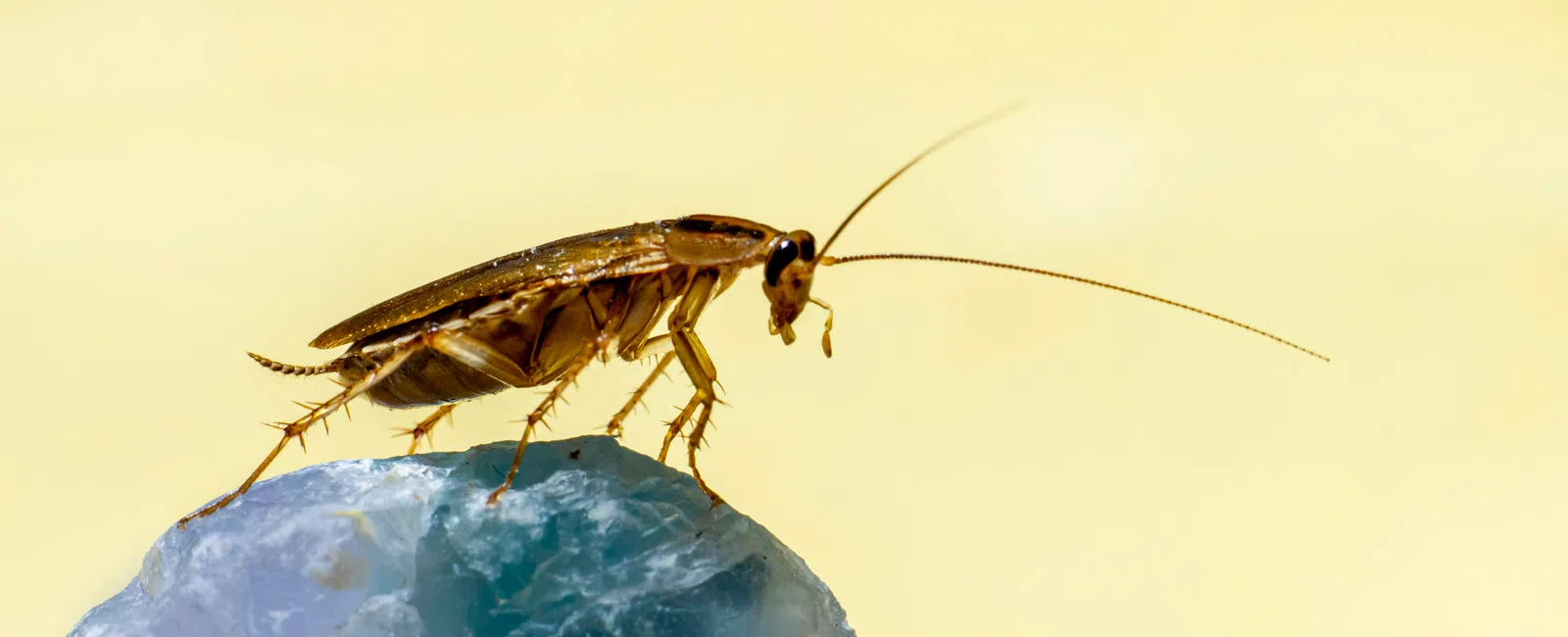
Cockroach droppings look like tiny dark specks or small cylindrical pellets, depending on the size of the roach that left them. Small roaches like the German cockroach leave droppings that resemble ground black pepper or coffee grounds, while larger roaches leave pellets with blunt ends and faint ridges along the sides. Where you find them shows where roaches are hiding, and because droppings carry allergens, they should be cleaned up carefully rather than swept away.
What Do Cockroach Droppings Look Like?
Roach poop varies mostly by species, and the species matters because it changes how the problem gets treated. Most homeowners find one of three things.
Small Roach Droppings: Pepper-Like Specks
German cockroaches are the small, light-brown roaches that live indoors, usually in kitchens and bathrooms. Their droppings are tiny dark brown to black specks, about the size of ground pepper. You'll usually see them in clusters along cabinet hinges, inside drawers, on top of door frames and around appliance motors.
Most people mistake them for spilled pepper, coffee grounds or dirt at first. The giveaway is that the specks come back in the same spots after you wipe them away.
Large Roach Droppings: Small Ridged Pellets
American cockroaches and other large species leave bigger droppings: solid, cylindrical pellets with blunt ends. Look closely and you'll often see faint ridges running lengthwise down the sides. They're dark brown to black and tend to turn up in garages, under sinks, in utility closets and near floor drains.
These larger roaches spend much of their time outdoors and wander inside through gaps. A few pellets in one corner of the garage is a very different situation from specks spread across every kitchen cabinet.
Smear Marks and Stains
Where there's moisture, roach droppings aren't always solid. They can leave dark, irregular streaks on walls, countertops, cabinet interiors and the tops of baseboards. Smear marks near a sink, dishwasher or refrigerator are one of the clearest signs of German cockroach activity, because those roaches cluster around warmth and water.
How to Tell Roach Droppings From Mouse Droppings
Mouse droppings are what roach droppings get confused with most often, especially the larger roach pellets. Three details separate them:
- Mouse droppings taper to pointed ends. Roach pellets have blunt, squared-off ends.
- Large roach droppings often show ridges along the sides. Mouse droppings are smooth.
- Mouse droppings are usually about the size of a grain of rice, which is far bigger than anything a German cockroach leaves.
What's nearby helps too. Mouse droppings often show up alongside gnawed food packaging, shredded paper or insulation used for nesting. If that's what you're seeing, our rodent control service is the better fit than a roach treatment.
Where to Look for Cockroach Droppings
Roaches leave droppings where they rest and travel, so the droppings lead you straight to their hiding spots. Grab a flashlight and check these areas:
- Inside kitchen cabinets, especially along the hinges and in the back corners
- Under and behind the refrigerator, stove and dishwasher
- Around the refrigerator's motor housing and inside the microwave or coffee maker
- Under bathroom vanities and around pipes where they come through the wall
- Along baseboards and the top edges of door and window frames
- In garages, laundry rooms and closets where cardboard boxes are stored
German cockroaches favor the warmth of appliance motors, which is why droppings inside a microwave or around a fridge motor are worth taking seriously.
What the Amount of Droppings Tells You
A handful of pellets in the garage with no other signs can come from a single large roach that wandered in. That's a reason to check for gaps under doors and around pipes, not proof of an infestation.
Specks spread across several cabinets, smear marks near the sink, or droppings in more than one room point to roaches living inside the home. The case gets stronger if you also notice a musty, oily odor or small brown egg cases. Seeing roaches during the day is another warning sign, since cockroaches are nocturnal and usually only come out in daylight when their hiding spots are crowded.
To find out whether the activity is current, clean the area completely and check it again a few days later. Fresh droppings tend to look darker and slightly moist, while old ones are dry and crumble easily. New droppings in a spot you just cleaned mean roaches are still using it.
Are Cockroach Droppings Harmful?
Yes, mainly because of allergens. Cockroach droppings, shed skins and saliva contain proteins that trigger allergic reactions and can set off asthma symptoms, and children are especially sensitive to them. As droppings dry and break down, those particles mix into household dust and get stirred into the air.
Roaches also crawl through drains, garbage and sewer lines before walking across counters, and they can carry bacteria such as salmonella onto surfaces and food.
There's one more reason not to leave droppings in place. German cockroach droppings contain aggregation pheromones, chemical signals that draw other roaches to the same hiding spot. Old droppings help keep the colony gathered right where it is.
How to Clean Up Roach Droppings Safely
Cleaning won't end an infestation, but it removes allergens and lets you see whether new droppings appear.
- Put on disposable gloves, and add a dust mask if anyone in the home has asthma or allergies.
- Skip the broom, since dry sweeping kicks droppings into the air. Use a vacuum with a HEPA filter or wipe them up with damp paper towels.
- Clean the area with a household disinfectant or soapy water, including smear marks on walls and inside cabinets.
- Seal the paper towels or vacuum contents in a bag and put it in an outdoor trash can.
- Wash your hands, store food in sealed containers and fix any drips or leaks nearby.
Hold off on store-bought roach sprays and foggers. Foggers scatter German cockroaches deeper into walls and into other rooms instead of eliminating them, which makes the colony harder to reach.
Getting Rid of the Roaches Leaving the Droppings
The droppings you found usually point to the right treatment, which is why identifying them comes first.
Pepper-like specks and smear marks in the kitchen or bathroom almost always mean German cockroaches. They breed indoors, and over-the-counter sprays rarely reach where they nest. Our German cockroach treatment puts gel bait, dust and flushing agents directly into their hiding spots behind appliances, inside motor housings and under cabinets. We follow up every 7 to 10 days and re-treat at no extra cost while activity continues.
Larger ridged pellets in a garage, closet or near a drain usually come from American cockroaches or other large roaches that live outside and come in through gaps. For those, our cockroach treatment starts with an inspection of the outside of your home to find entry points like decayed wood around doors and gaps around utility lines. Bait goes around the perimeter, and interior areas get treated where roaches have already moved in.
If you keep finding droppings after cleaning, or you aren't sure what left them, schedule a free inspection. A technician will identify what's leaving them, show you where they're coming from and walk you through the treatment plan before any work begins.