Service verified on the live rodent control page: roof rats, Norway rats, and house mice are named outright, and the inspection, exclusion, trapping, and smoke test steps below match that page. Checked against the full live URL list: no existing post covers rodent season or timing. Six live posts cover rodents (roof rat identification, mice vs. rats, rat droppings, what attracts rats, rats in the attic, signs of a rodent infestation), so this post leaves identification and droppings detail to them and targets the seasonal searches only.
Rodent Season in South Florida: When Rats Move Indoors and Why
Roof rats in Florida breed all year, with peaks in spring and fall, and the damage they cause becomes obvious during citrus season, which runs September through March, according to UF/IFAS Extension. Late fall is where those two cycles overlap. Rodent season in South Florida is that overlap: a new generation of rats, ripe fruit in the yard, and a roofline one branch away. Late fall through winter is when that activity is most likely to move into an attic.
When Rodent Season Starts in South Florida
South Florida has no hard freeze to push rodents indoors on a single date, so rat season here builds over several weeks. Three conditions line up between October and December.
The first is breeding. A female roof rat can have four or five litters a year, with five to eight pups in each, and those pups reach breeding age in three to four months. Pups born during the fall peak are adults before winter ends.
The second is food. Dooryard citrus starts ripening in September and stays on the tree into March. Roof rats forage up to about 150 yards away from the nest, so one loaded orange or grapefruit tree can draw rats out of several neighboring yards. A fruit with a round hole the size of a quarter and the inside hollowed out is their signature.
The third is shelter. Nights cool off, and an attic stays warm, dry, and undisturbed. Roof rats already nest above ground in palm frond skirts and hollow trees, and they move along branches, vines, and utility wires. A soffit gap or an unscreened roof vent is the next stop on a route they already use.
When Rats Are Most Active
Rats are nocturnal, and their activity peaks in the first half of the night. Mice follow a split schedule, with one burst right after dark and another between midnight and dawn. This is why the first clue during rodent season is usually sound: scratching or scurrying above the ceiling within an hour or two of sunset.
Daytime sightings carry a different message. Rodents show up in daylight when food runs short or the population has grown large. A rat crossing a fence at noon usually means the population nearby is already crowded.
Which Rodents Move Indoors During Rodent Season
Three species are behind the rodent problems we treat across Broward, Miami-Dade, and Palm Beach counties.
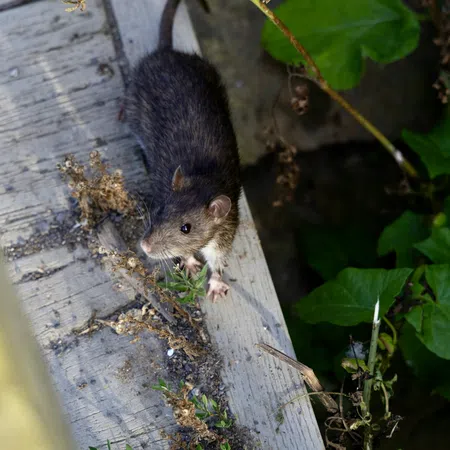
Roof rats are the most common rat in South Florida. Locals also call them palm rats, fruit rats, or citrus rats. An adult measures 12 to 14 inches with the tail, and the tail is longer than the head and body together. They enter high, through rooflines, attic vents, and overhanging branches, then nest in attics and walls.
Norway rats are heavier, at three quarters of a pound to a full pound, with a blunt muzzle and a shorter tail. They enter at ground level and nest in burrows, crawl spaces, and lower walls.
House mice weigh about half an ounce and pass through a gap a quarter inch wide. Any opening that fits a pencil fits a mouse. They breed faster than either rat, with up to eight litters a year, and settle in kitchens, pantries, and wall voids.
Signs Rodent Season Has Reached Your Home
Rodents stay out of sight, so an infestation is identified by what it leaves behind.
- Scratching, scurrying, or thumping in the attic, ceiling, or walls after dark
- Dark droppings along rafters, on attic insulation, or on pantry shelves
- Dark, greasy rub marks along rafters, pipes, baseboards, and entry holes
- Fresh gnaw marks on wood, wiring, plastic, or food packaging, lighter in color than the surface around them
- Hollowed-out citrus on the tree or on the ground
- A musty odor in a closed attic, garage, or cabinet
Fresh droppings are dark and shiny, and old ones turn gray and crumble. Shiny droppings in the attic in December mean rats are living there now.
What a Winter Infestation Does to a House
Rats gnaw constantly. In an attic that means electrical wiring, rafters, and plastic or lead pipes, and chewed wiring is a known fire risk. Insulation gets tunneled and soiled along every runway.
The health risk comes through contamination. The CDC lists leptospirosis, salmonellosis, and rat-bite fever among the diseases rodents spread directly, through droppings, urine, saliva, and bites. Rodents also contaminate far more food than they eat.
Time works against the homeowner. Roof rat gestation lasts 21 to 23 days, so a pair that moves in around Thanksgiving can have a litter of five to eight before the new year, and that litter can breed by early spring. Waiting until the noise gets worse means removing a colony instead of a few animals.
How Royal Pest & Termite Handles Rodent Season
Our rodent control service follows the same order on every home, because trapping without sealing only makes room for the next rats.
- We inspect the interior and exterior for entry points, travel paths, and nesting sites, and we identify the species. The inspection covers rooflines, soffits, vents, utility penetrations, plumbing gaps, A/C lines, garage doors, and foundation cracks.
- We seal every entry point, so new rodents cannot get in and the ones inside cannot retreat into the walls.
- We place traps where the inspection found activity. We use traps instead of poison, which keeps rodents from dying inside walls and suits homes with pets and children. Most activity ends within two weeks.
- We run a smoke test if activity continues after four weeks of exclusion and trapping. The test checks for cracked or disconnected plumbing lines under the foundation, a hidden route into wall voids.
The service includes unlimited callbacks. We run it throughout Broward County, Miami-Dade County, and Palm Beach County.
Schedule a Rodent Inspection Before Peak Season
Rodent season in South Florida is underway by late November, and the population in an attic only grows through winter. Royal Pest & Termite provides free inspections and a detailed estimate before any work begins. Our primary service area covers Miramar, Pembroke Pines, Davie, Hollywood, and Southwest Ranches, with coverage across the three-county area. Call 754-800-5284 or schedule service online to have a technician check your roofline, attic, and entry points.