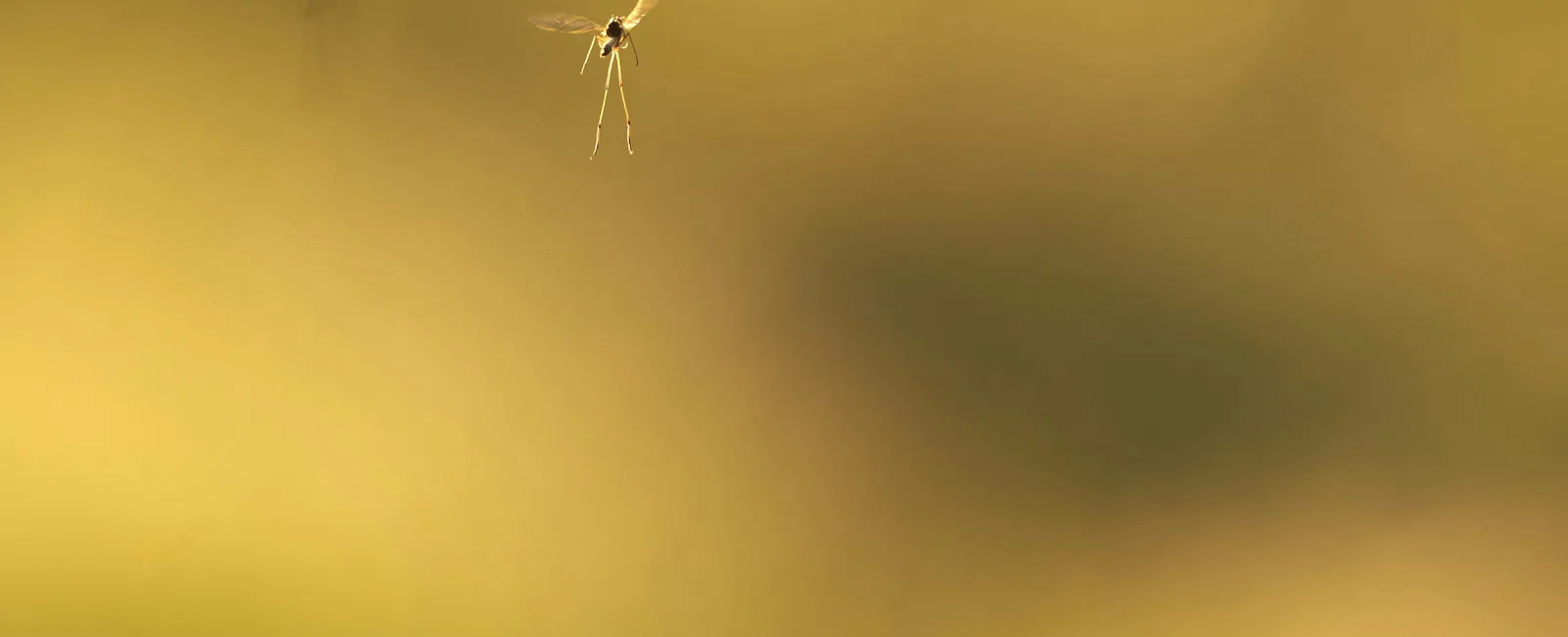
"Gnats" is a general term people use for several different small flies found indoors. In South Florida homes, the most common are fruit flies, drain flies, fungus gnats, and phorid flies.
The important part is this: they do not all come from the same place. Fruit flies usually come from fermenting food or drink residue. Drain flies come from buildup inside drains. Fungus gnats come from moist potting soil. Phorid flies can come from drains, garbage, dead animals, or sewer issues.
If you treat the wrong source, the problem keeps coming back. The fastest way to get rid of gnats is to identify which fly you have, remove the breeding source, and then treat the affected area.
How to Identify Which Gnat You Have
Start with where you are seeing the flies. Location usually tells you more than the insect itself.
Fruit Flies
Fruit flies are small, usually about 3 to 4mm long, with rounded bodies, tan to brown coloring, and red eyes. They are most often found around fruit bowls, wine bottles, recycling bins, trash cans, and kitchen sink drains.
Fruit flies breed in fermenting organic material. Common sources include overripe fruit, spilled juice, alcohol residue, dirty recycling containers, and organic buildup inside sink drains.
- Where you find them: Kitchens, fruit bowls, recycling bins, beverage areas, trash cans, and sink drains.
- Key identifier: Small rounded body with red eyes.
Drain Flies
Drain flies are small, fuzzy, moth-like flies. They have broad wings that sit flat over the body and often move in short, erratic hops instead of strong flight.
Drain flies breed in the organic slime that builds up inside drain pipes, floor drains, shower drains, sump pits, and other damp areas with decaying material.
- Where you find them: Bathroom sinks, kitchen sinks, shower drains, laundry drains, floor drains, and seldom-used drains.
- Key identifier: Fuzzy, moth-like wings and activity near drains instead of food.
For more detail, see our dedicated drain fly guide.
Fungus Gnats
Fungus gnats are small, slender, dark flies with long legs and long wings. They are usually found near houseplants, patio planters, and moist potting soil.
Fungus gnats breed in damp soil with decaying organic matter. Overwatered houseplants are the most common source.
- Where you find them: Around houseplants, potted plants, and consistently moist soil.
- Key identifier: Slender dark body, long legs, and activity near plants.
Phorid Flies
Phorid flies, also called humpbacked flies, are small flies with a noticeable arched back. They often run quickly across surfaces instead of flying away immediately.
Phorid flies can breed in drains, garbage, compost, dead animals inside walls or attics, and sometimes sewer issues under slabs. They are less common than fruit flies, drain flies, or fungus gnats, but they can point to a more serious hidden source.
- Where you find them: Near drains, garbage areas, or rooms where there is no obvious food, plant, or drain source.
- Key identifier: Humped back and fast-running movement on surfaces.
Quick Gnat Identification Test
Before treating, take a few minutes to figure out where the flies are coming from.
- Near fruit, drinks, trash, or recycling: likely fruit flies
- Near sink, shower, or floor drains: likely drain flies
- Near houseplants or potting soil: likely fungus gnats
- Throughout a room with no obvious source: possibly phorid flies, which may need further inspection
If you suspect drain flies, place a piece of tape sticky-side-down over the drain overnight. If flies are stuck to the tape the next morning, the drain is likely the source. If the tape is clear after 24 hours but flies are still present, look elsewhere.
How to Get Rid of Fungus Gnats
Fungus gnat control focuses on the soil, not the flying adults.
- Let the top 1 to 2 inches of soil dry between waterings
- Avoid overwatering indoor plants
- Use yellow sticky traps at soil level to catch adults
- Remove dead leaves and organic debris from the top of the soil
- Use a soil treatment labeled for fungus gnat larvae when needed
In South Florida, it is easy to overwater houseplants because of the heat. But indoor plants in air-conditioned spaces often need less water than homeowners expect.
Do not use drain cleaners for fungus gnats. They breed in soil, not pipes.
Why Gnat Problems Get Worse in South Florida
South Florida's warm, humid climate helps small flies reproduce quickly. Fruit flies can complete their lifecycle in about 8 to 10 days, while drain flies and fungus gnats can also build populations fast when the breeding source is left alone.
Humidity makes the problem worse. Drain buildup stays moist, potting soil dries more slowly, and food residue ferments faster. That means a small gnat problem can become noticeable within a couple of weeks.
This is why killing adult flies rarely works for long. If the breeding source stays active, the next generation replaces them quickly.
When Gnats Require Professional Pest Control
Most gnat problems can be fixed by removing the breeding source. Professional help may be needed when:
- You cannot find the source after checking drains, food, plants, trash, and recycling
- Phorid flies are present with no obvious source
- Drain flies continue after several weeks of drain cleaning
- Flies are appearing in multiple rooms
- You may have more than one small fly species at the same time
Royal Pest & Termite's general pest control programs can help identify non-obvious breeding sources and address persistent small fly infestations when standard cleaning and source removal have not solved the problem.
Related Guides
- Drain Flies: identification, tape test, and drain treatment
- Pantry Moths: how to find and eliminate stored food pests
- Booklice: humidity pests commonly confused with small flies
Schedule a Pest Inspection
If gnats keep coming back or you cannot find the breeding source, a professional inspection can help identify what is driving the infestation.
Royal Pest & Termite is locally owned, based in Miramar, and has served South Florida homes since 2014. Our general pest control programs address small fly infestations when standard source-elimination methods have not resolved the problem.
Call us at (754) 202-4605 or schedule a free inspection online.
We serve Miramar, Pembroke Pines, Davie, Hollywood, Fort Lauderdale, Boca Raton, South Palm Beach County, and most of Broward County, FL. We also service select areas in northern Miami-Dade County. Call us to confirm availability at your address.